MicroSims
MicroSims are small interactive simulations. Each one focuses on a single idea. Click a card to open it. Teachers: every MicroSim page has an embed code you can paste into your own site.
-
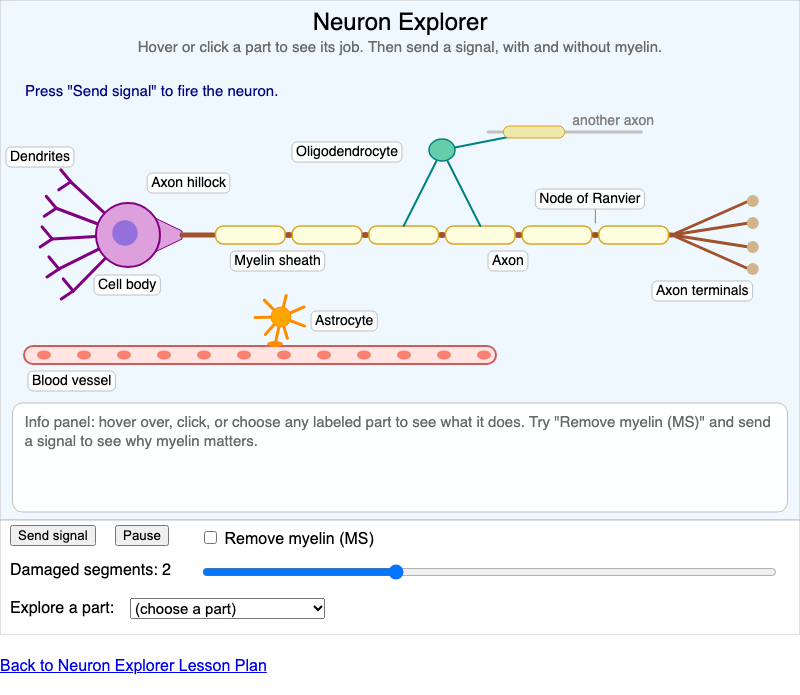
Explore the parts of a neuron and two glial cells, then send a signal down the axon with and without myelin to see why multiple sclerosis slows or blocks signals.
Chapter 1
-
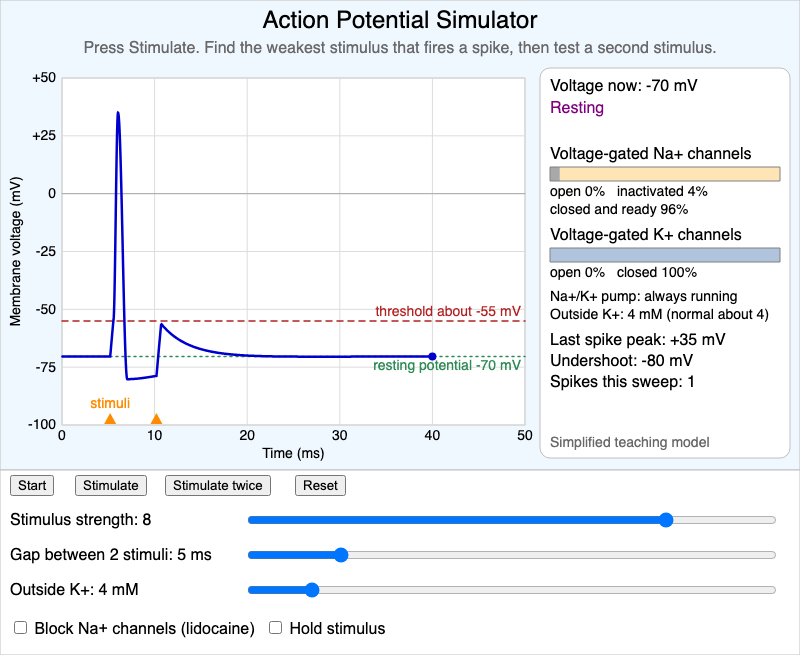
Interactive membrane-voltage plot showing threshold, the all-or-none spike, refractory periods, firing rate coding, lidocaine block, and the effect of outside potassium.
Chapter 2
-
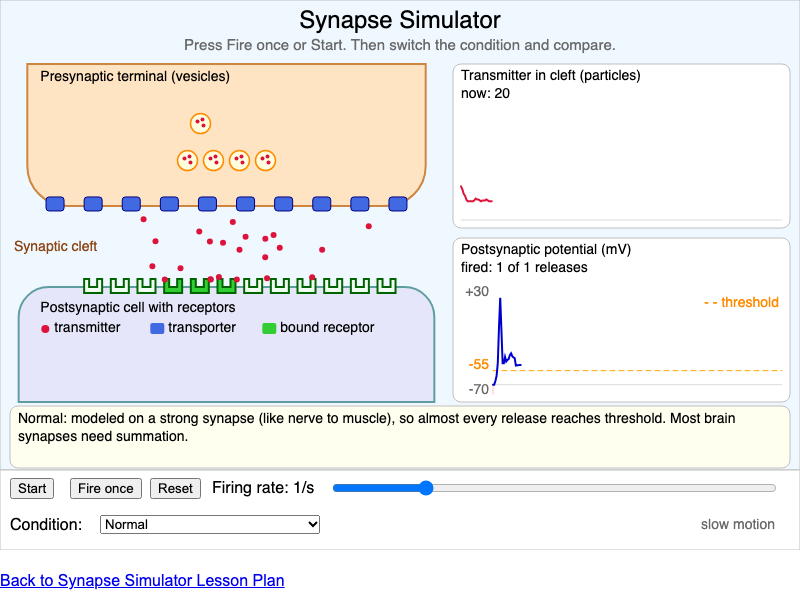
A close-up of a chemical synapse. Fire the presynaptic neuron and see how a reuptake blocker, a receptor antagonist, or fewer receptors change cleft transmitter and the postsynaptic potential.
Chapter 3
-
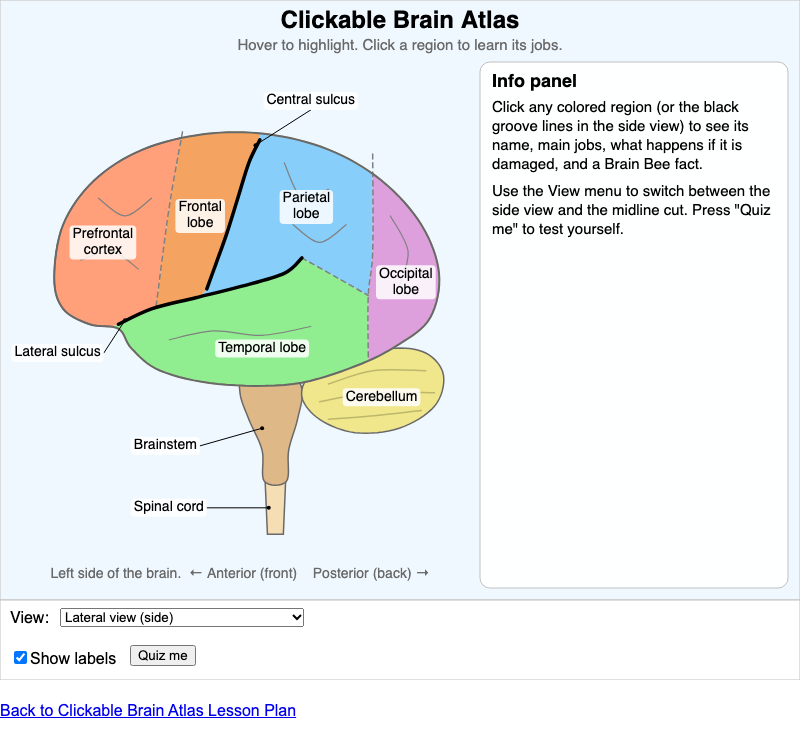
A clickable lateral and midsagittal brain atlas with region info panels and a quiz mode for learning neuroanatomy.
Chapter 4
-
Visual Pathway Lesion Simulator
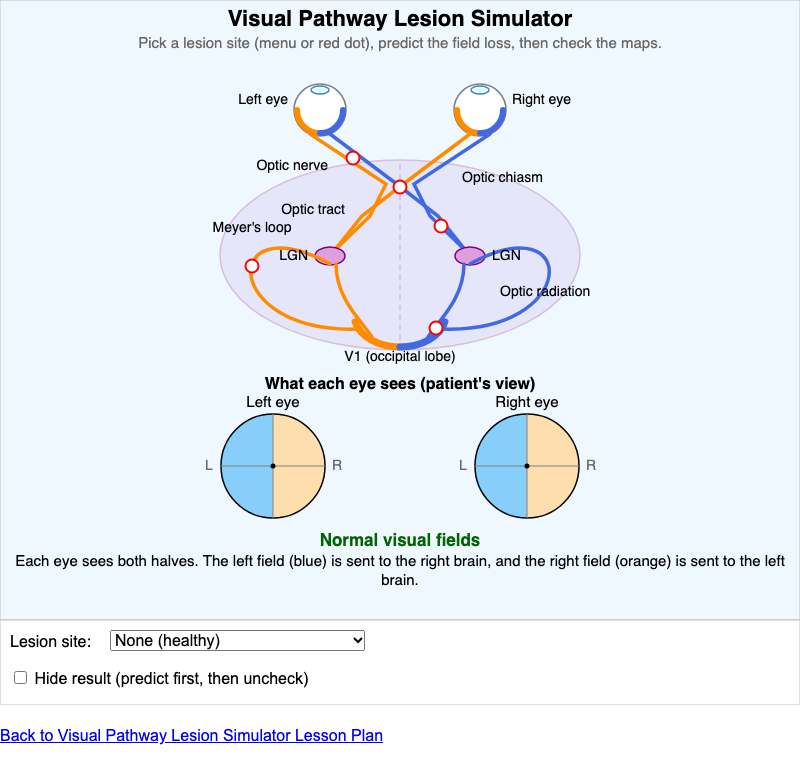
Place a lesion along the visual pathway, from optic nerve to occipital cortex, and see the matching visual field loss in each eye.
Chapter 5
-
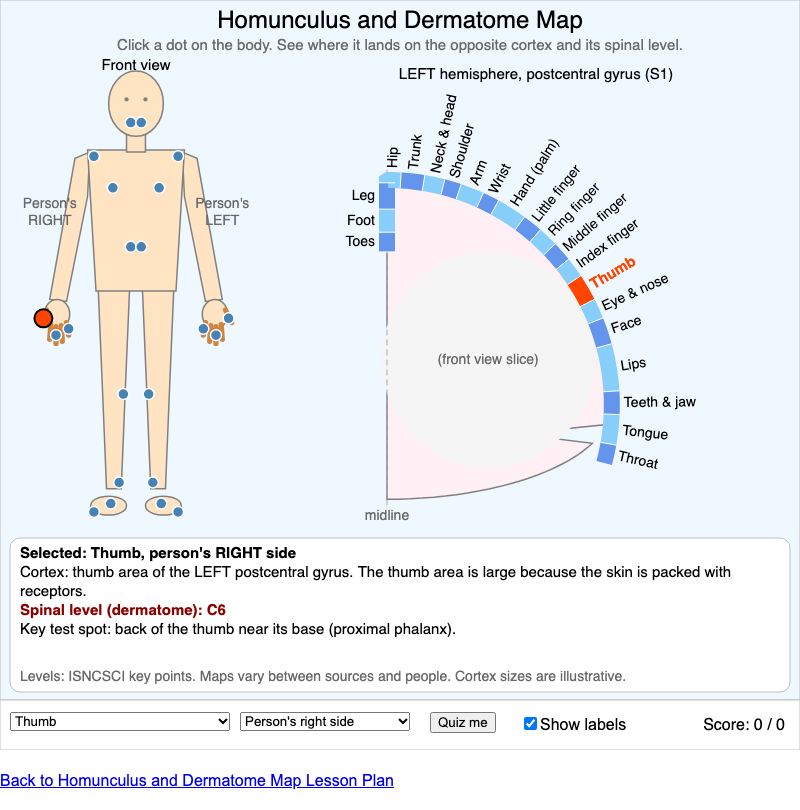
Click a body region to see where it lands on the opposite primary somatosensory cortex and which spinal level (dermatome) or cranial nerve carries it.
Chapter 6
-
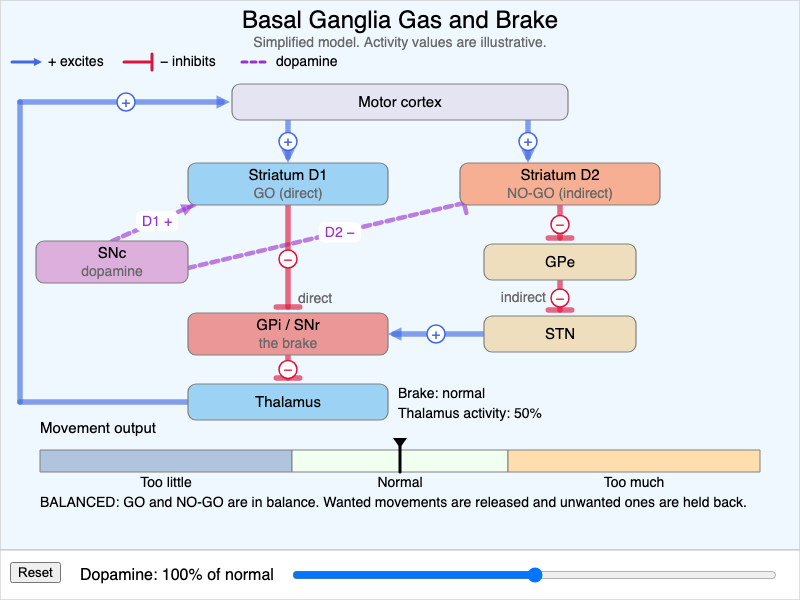
A simplified basal ganglia circuit. Slide dopamine from low to high and watch the direct (GO) and indirect (NO-GO) pathways change movement output.
Chapter 7
-
Synaptic Pruning Over a Lifetime
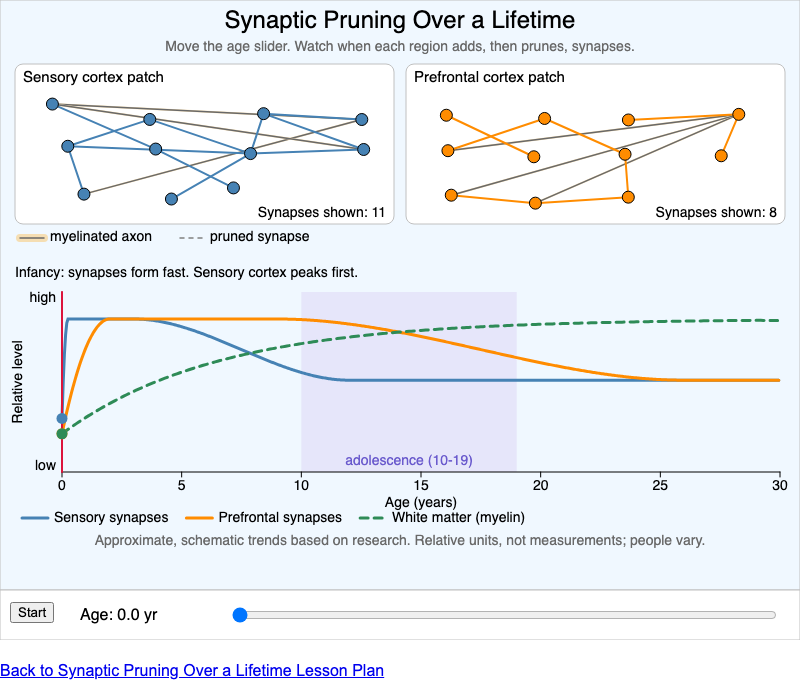
An age slider from birth to 30 shows synapses being overproduced and then pruned, earlier in sensory cortex and later in prefrontal cortex, while white matter keeps growing.
Chapter 8
-
Aplysia Habituation and Sensitization
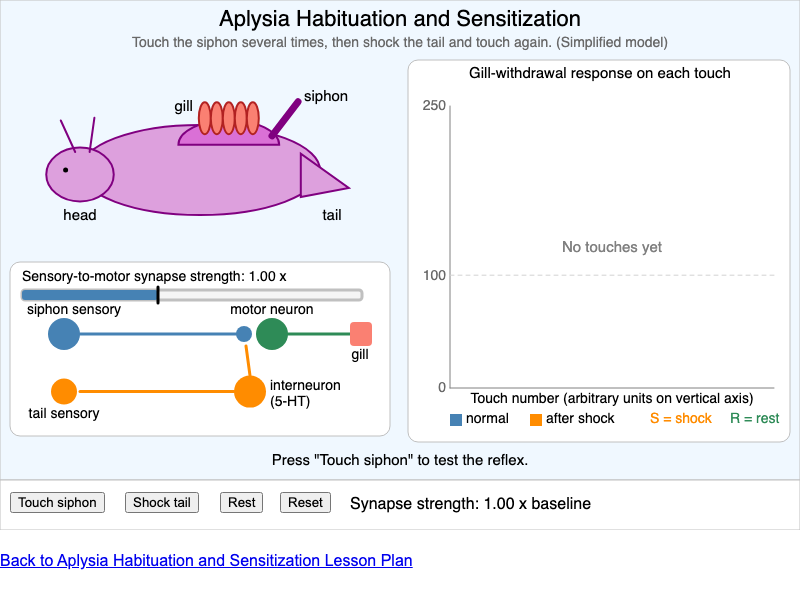
Touch a simplified sea slug's siphon and shock its tail to see how one synapse weakens with habituation and strengthens with sensitization.
Chapter 9
-
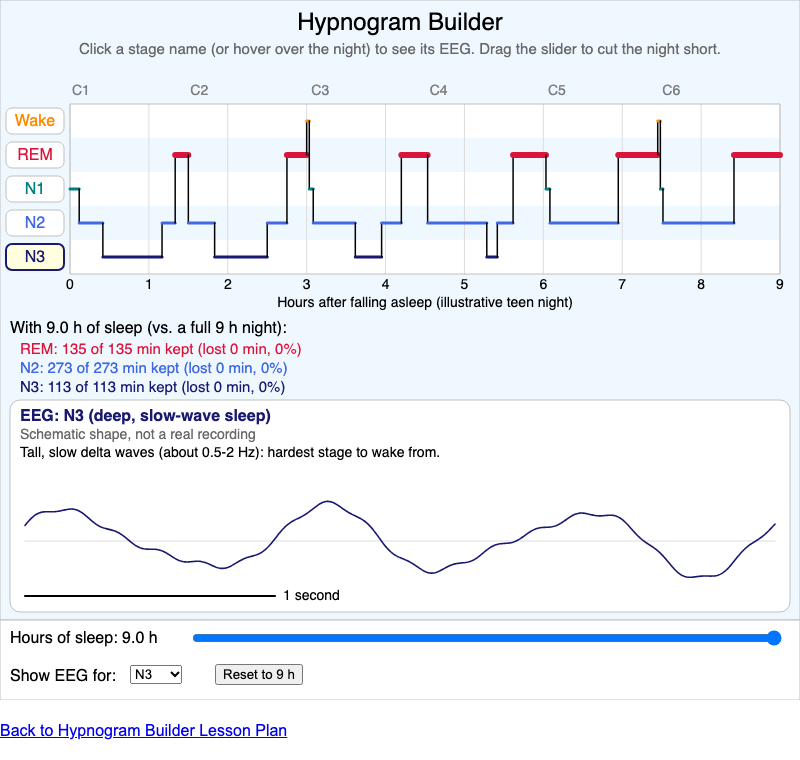
An interactive hypnogram of an illustrative 9-hour teen night with schematic EEG waves for each sleep stage and a slider that shows which stages are lost when sleep is cut short.
Chapter 10
-
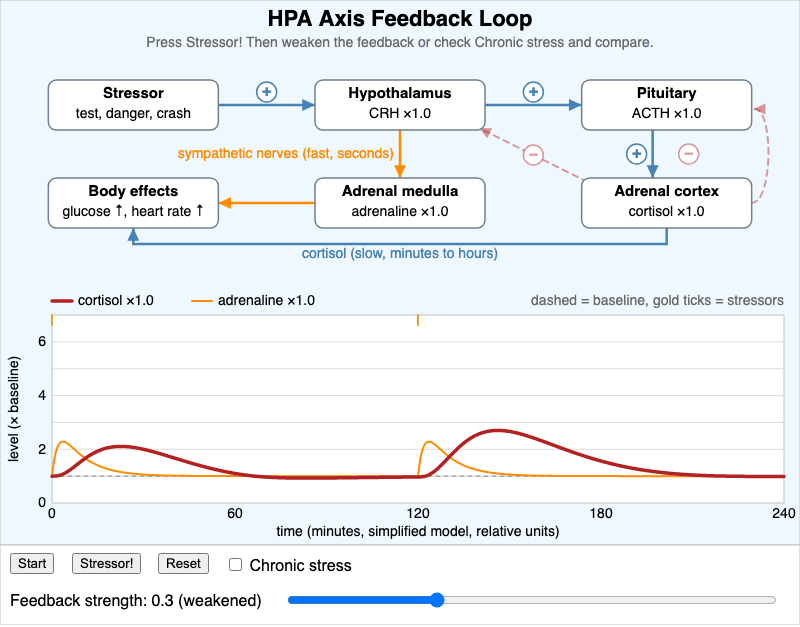
Trigger a stressor and watch cortisol rise and fall through the HPA axis, then weaken its negative feedback or repeat the stress to see cortisol stay high.
Chapter 11
-
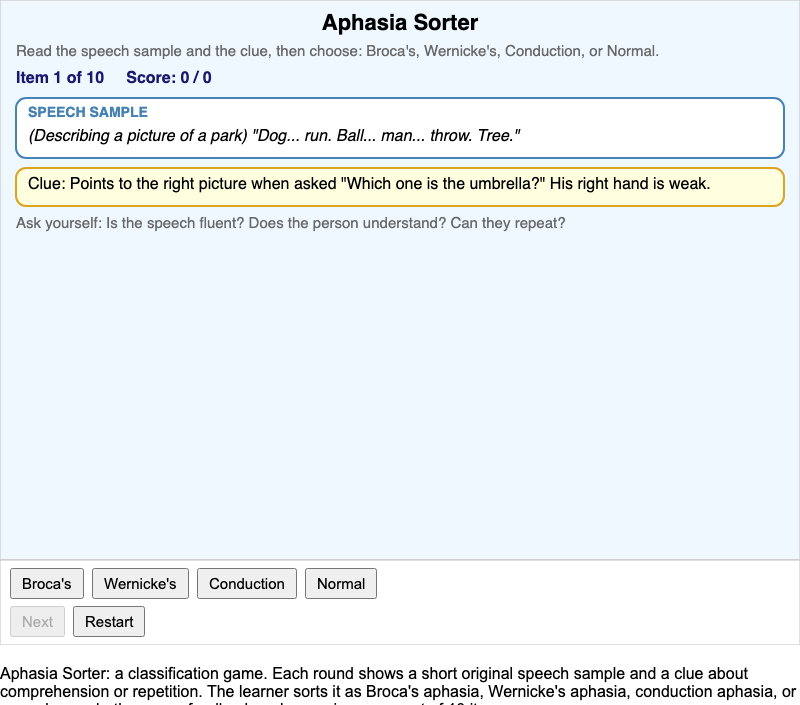
A classification game: read short original speech samples with a clue, then sort each as Broca's, Wernicke's, conduction aphasia, or normal speech.
Chapter 12
-
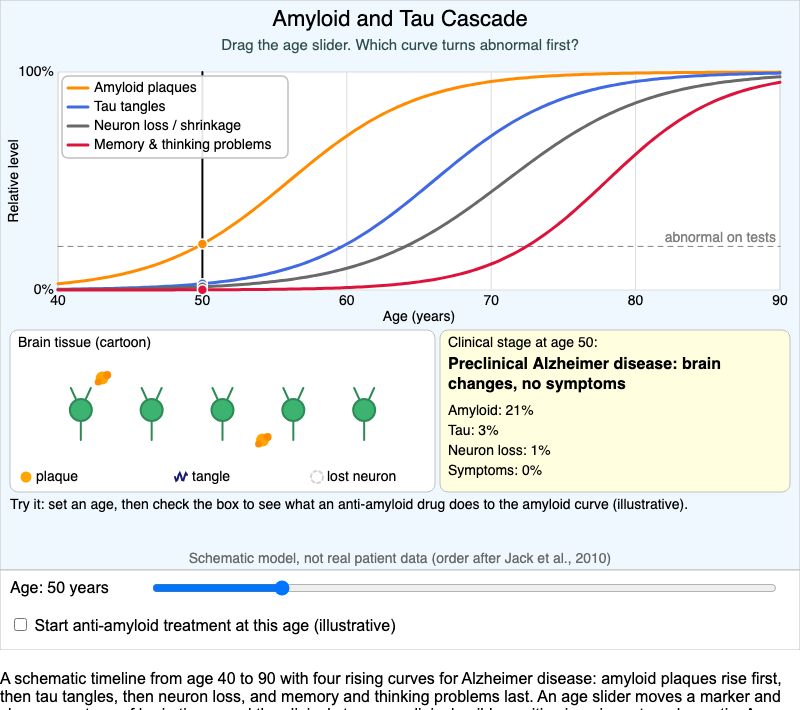
A schematic timeline of Alzheimer's disease showing amyloid, tau, neuron loss, and symptoms rising in order, with an illustrative anti-amyloid treatment.
Chapter 13
-
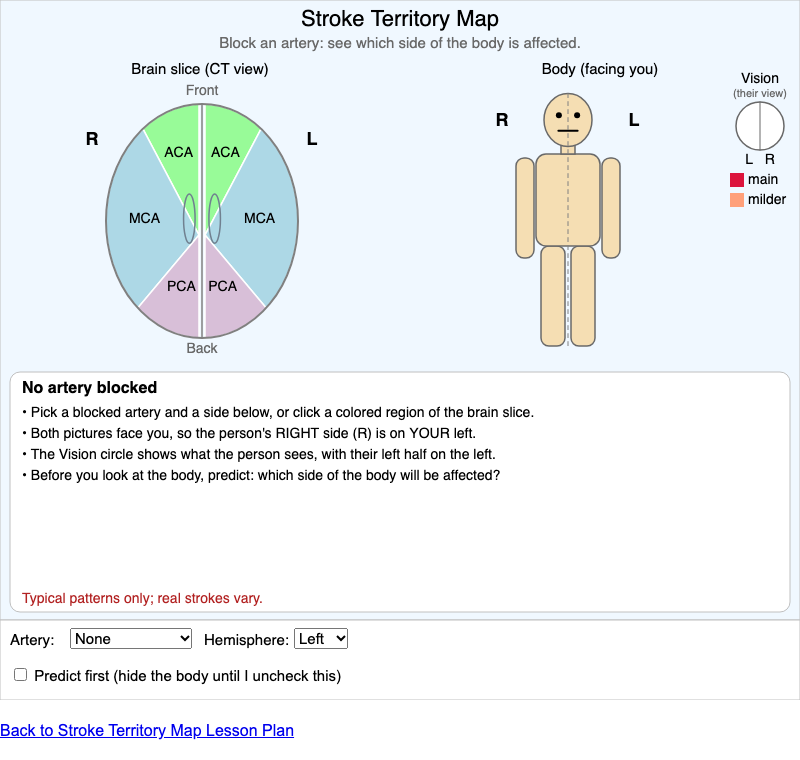
Block the anterior, middle, or posterior cerebral artery on either side and see which side of the body and which functions are typically affected.
Chapter 14
-
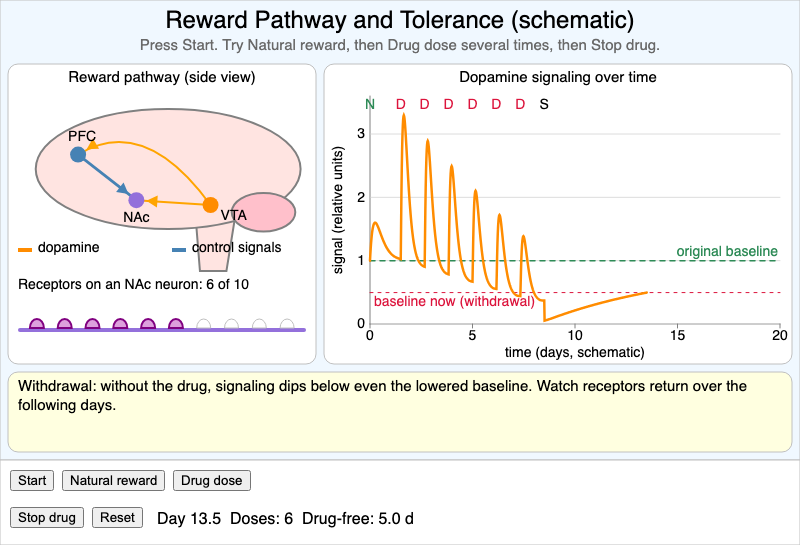
A schematic MicroSim of the dopamine reward pathway showing natural rewards, drug spikes, tolerance from receptor downregulation, and withdrawal.
Chapter 15
-
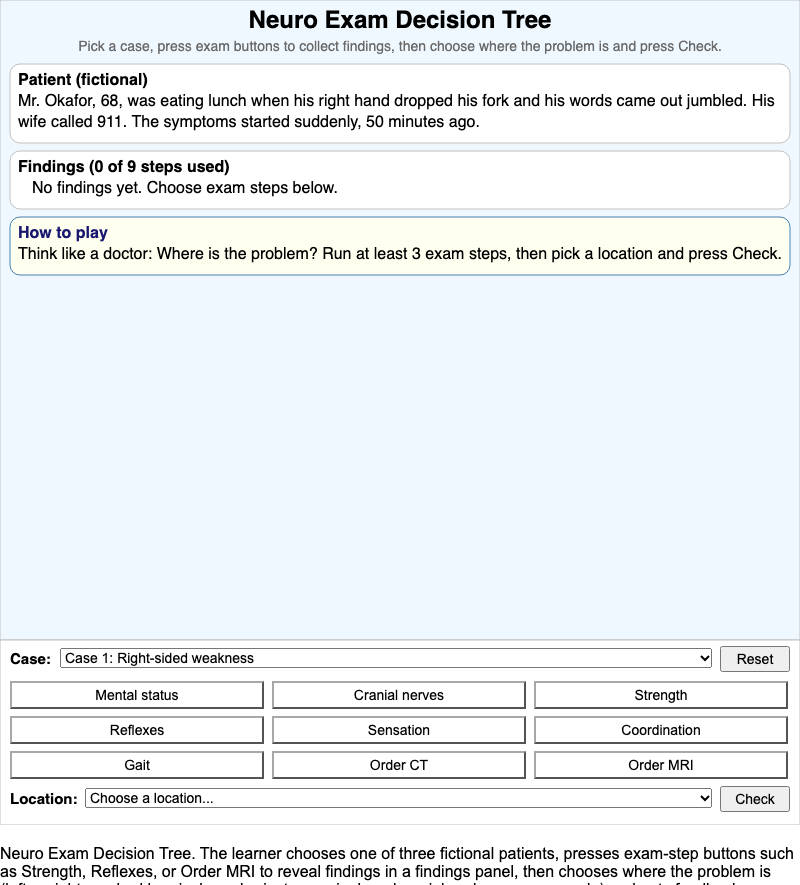
Interactive case-based MicroSim: run neurological exam steps on three fictional patients, collect findings, and localize the lesion.
Chapter 16
-
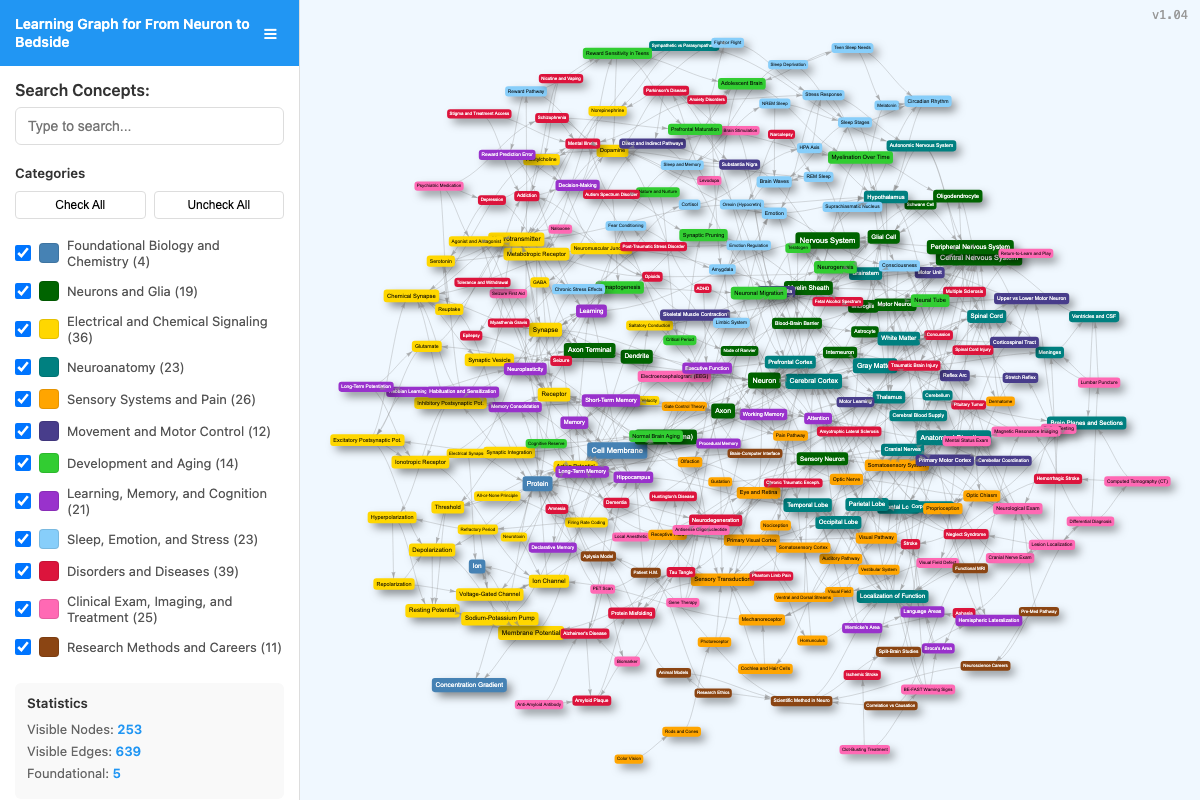
Explore all 253 concepts in this book and how they depend on each other.