List of MicroSims
Every chapter has one interactive simulation built with p5.js. Each sim has its own page with instructions, a lesson plan, and code to embed it in a class website. Every sim is a simplified teaching model; its chapter lists what the model leaves out.
-
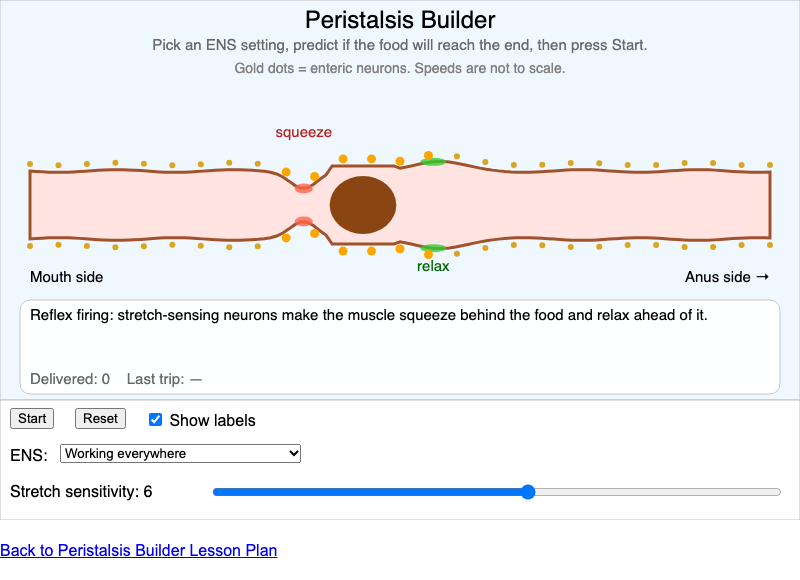
Switch the enteric nervous system on, off, or missing at the end of the gut and watch the peristaltic reflex push food along, or fail.
Chapter 1: The Brain in Your Belly
-
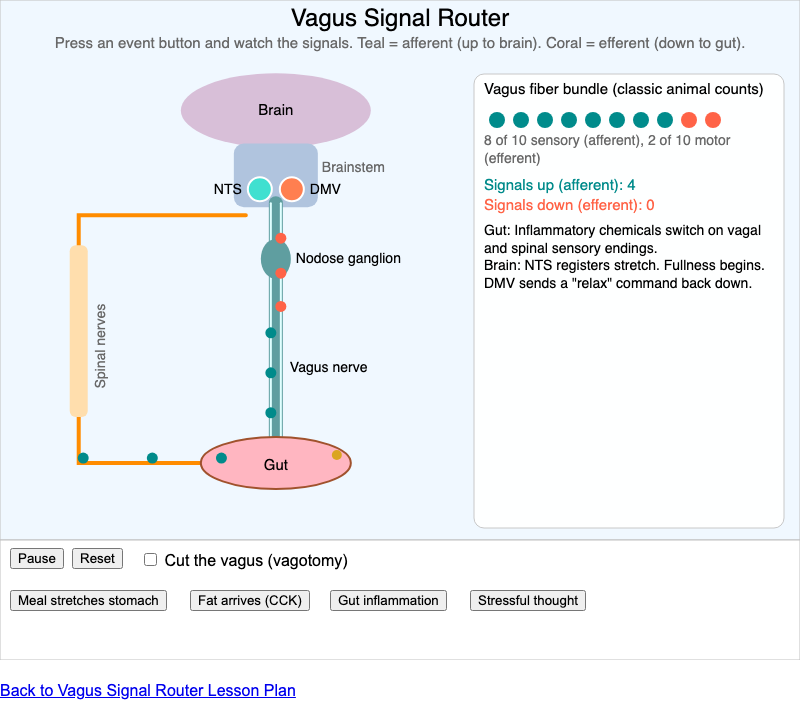
Trigger a meal, fat arriving, gut inflammation, or a stressful thought and watch signals travel up and down the vagus nerve and the spinal route.
Chapter 2: The Vagus Highway
-
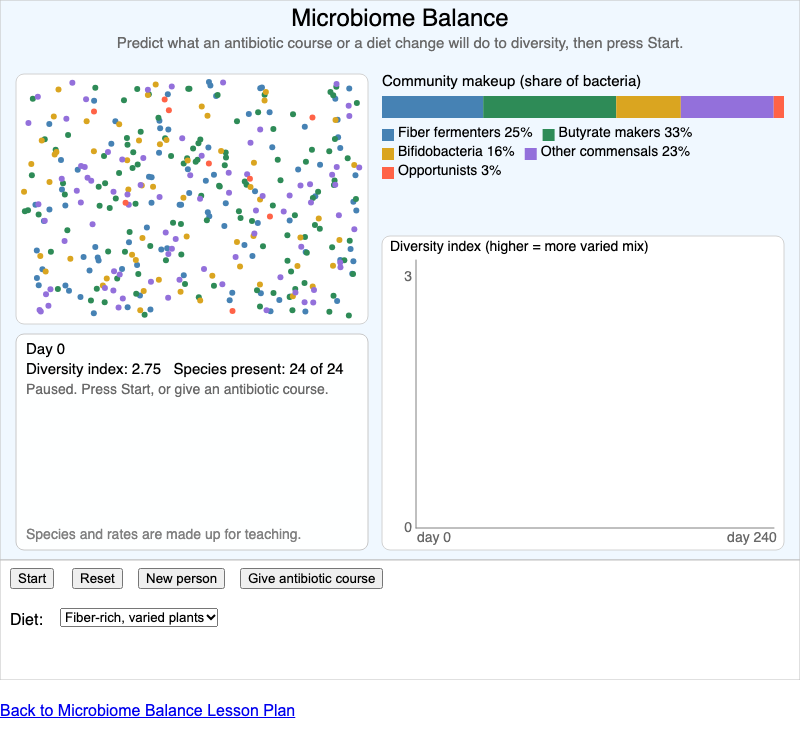
Give a cartoon gut community an antibiotic course or a diet change and watch diversity fall, opportunists bloom, and recovery that is often partial.
Chapter 3: Meet the Microbiome
-
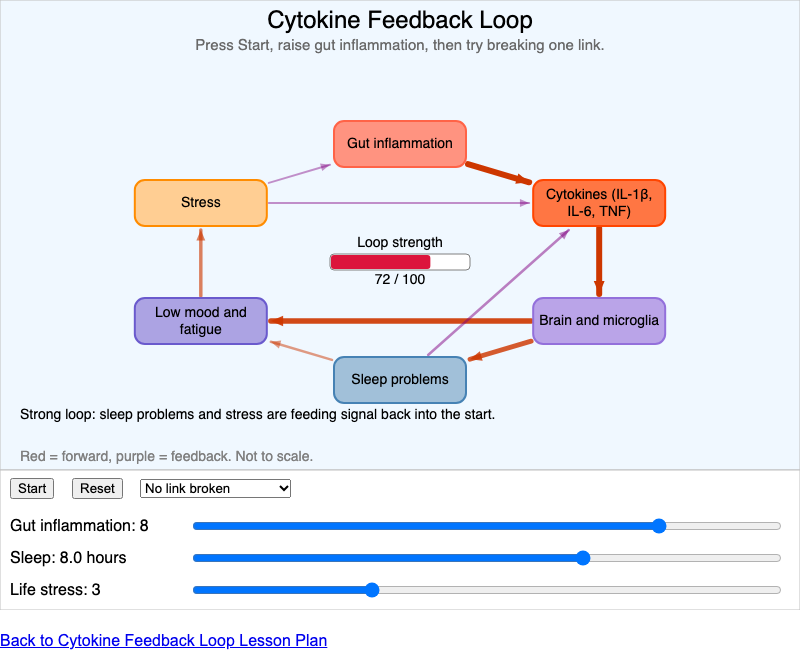
Raise gut inflammation, cut sleep, or add stress and watch immune signals loop through the brain, sleep, mood, and back; then break one link.
Chapter 4: The Immune System as a Sense Organ
-
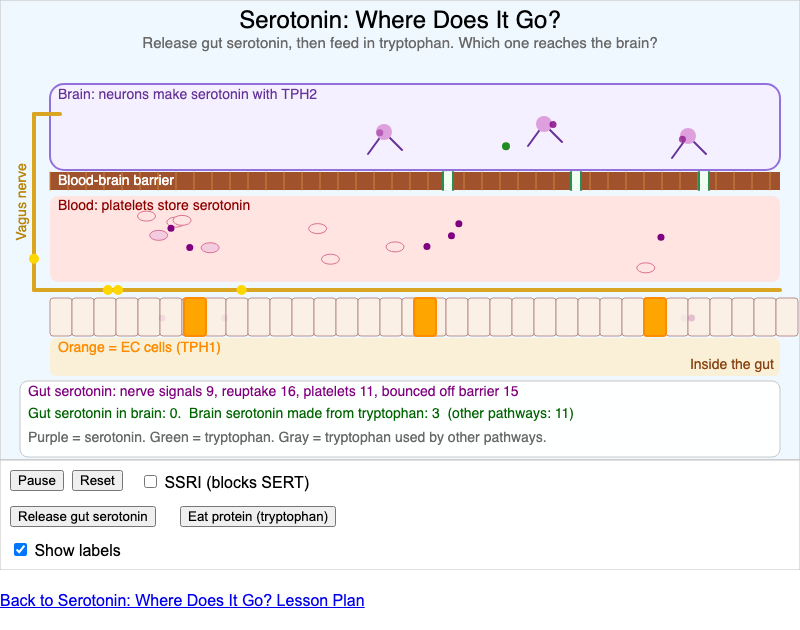
Release serotonin from gut cells and feed in tryptophan from food to see which one gets past the blood-brain barrier, and what an SSRI changes.
Chapter 5: Chemical Messengers and the Serotonin Myth
-
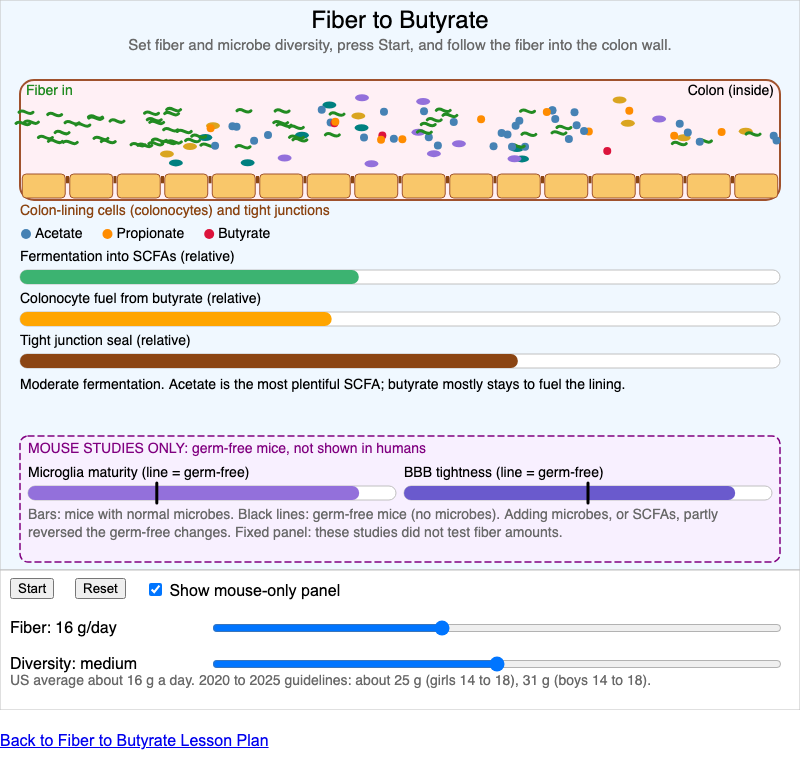
Trace fiber through bacterial fermentation to acetate, propionate, and butyrate, see butyrate fuel the colon lining, and keep mouse-only brain findings separate.
-
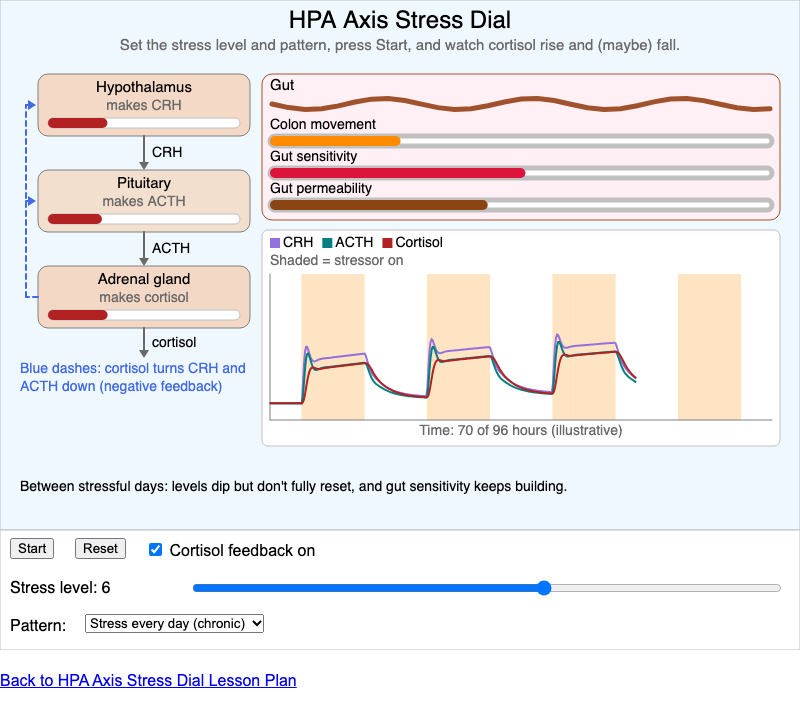
Dial up stress, watch CRH, ACTH, and cortisol rise, and see how negative feedback resets the system after acute stress but not chronic stress, along with gut effects.
Chapter 7: Stress and the Gut
-
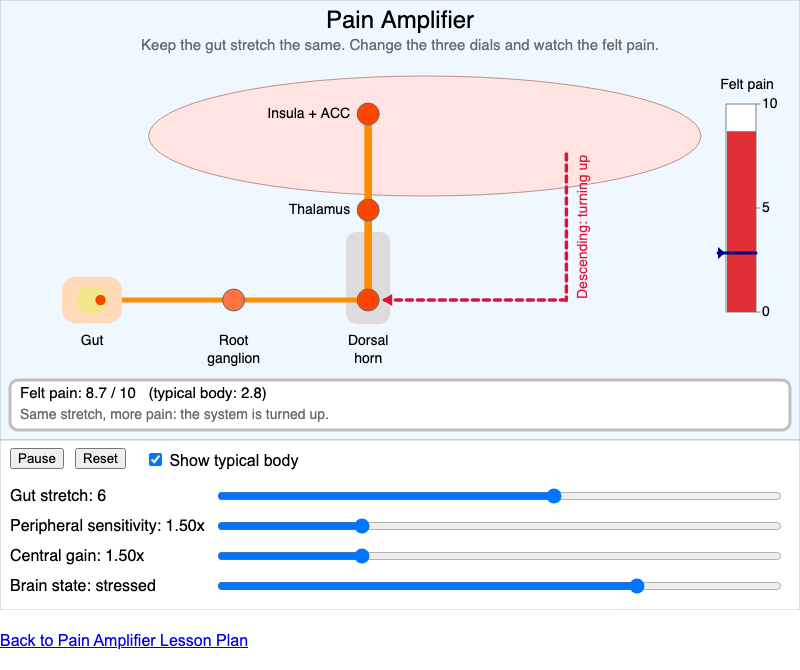
Keep a gut stretch the same and change peripheral sensitivity, central gain, and the brain's descending control to see how the felt pain changes.
Chapter 8: Pain, Sensitivity, and the Gut
-
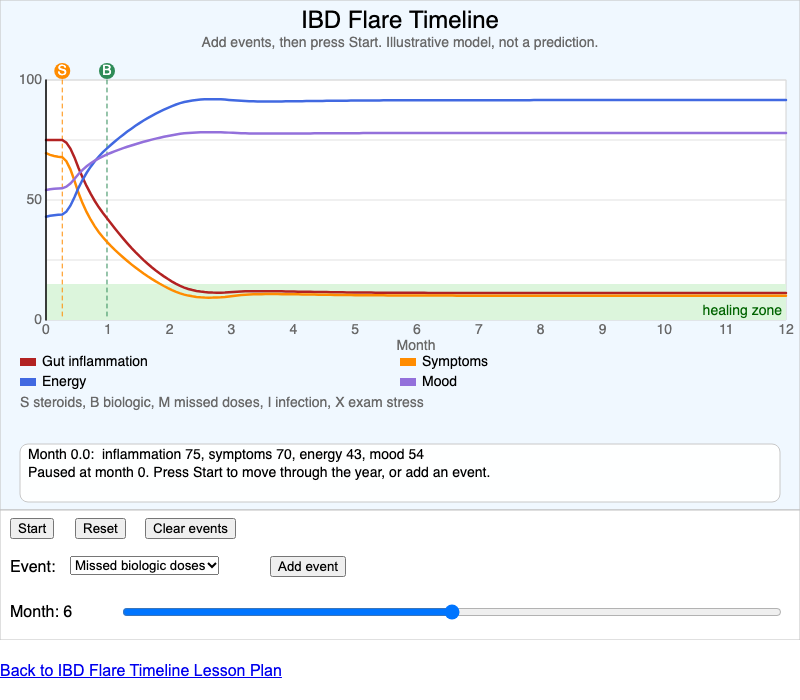
Place treatment and life events on a 12-month timeline and see how gut inflammation, symptoms, energy, and mood respond in an illustrative model of Crohn's disease.
Chapter 9: Inflammatory Bowel Disease
-
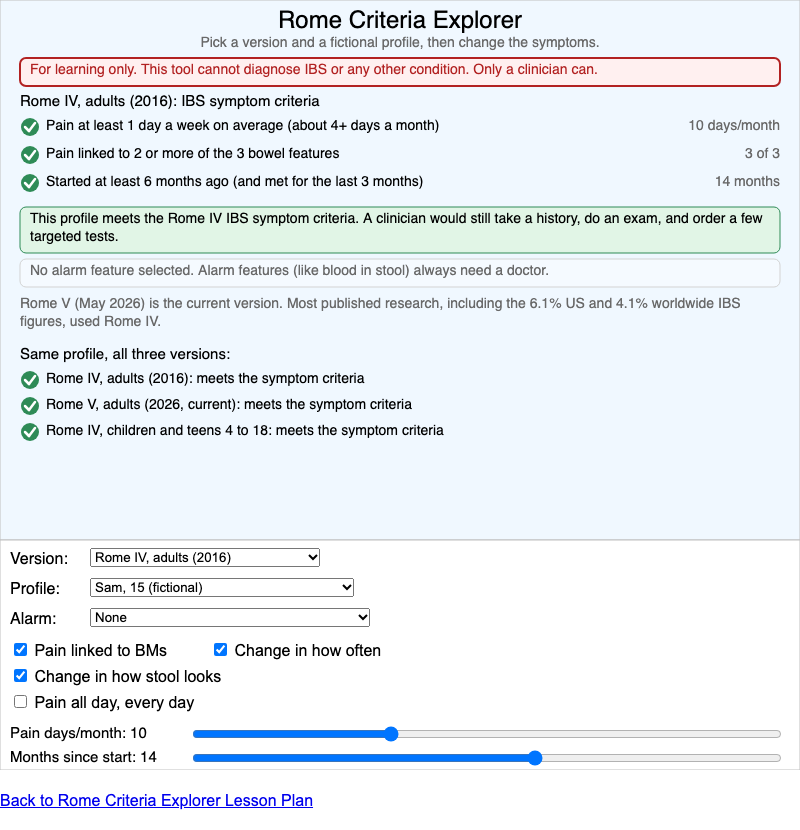
An educational checklist that applies the Rome IV, Rome V, and child and teen criteria for IBS to fictional symptom profiles. It cannot diagnose.
Chapter 10: IBS and Disorders of Gut-Brain Interaction
-
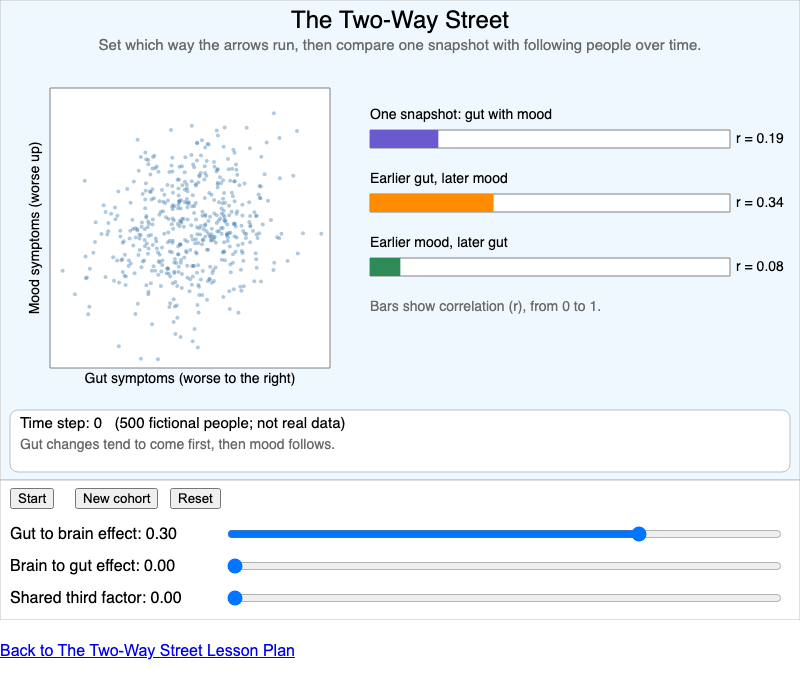
Simulate 500 fictional people and see why gut-to-brain effects, brain-to-gut effects, or a shared cause can all produce the same gut-mood correlation.
Chapter 11: Anxiety, Depression, and the Gut
-
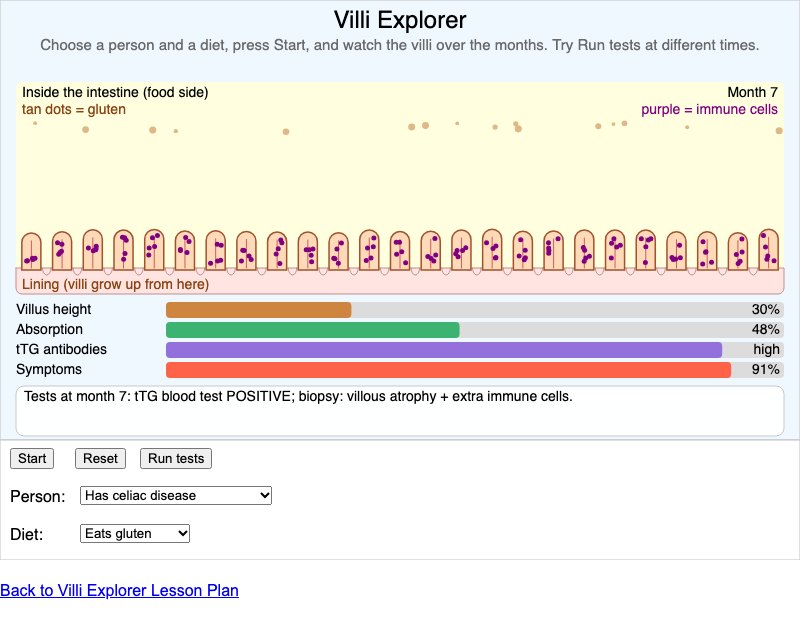
Toggle celiac disease and gluten exposure over months and watch the villi of the small intestine shrink, heal, and change test results.
Chapter 12: Celiac Disease and Food Reactions
-
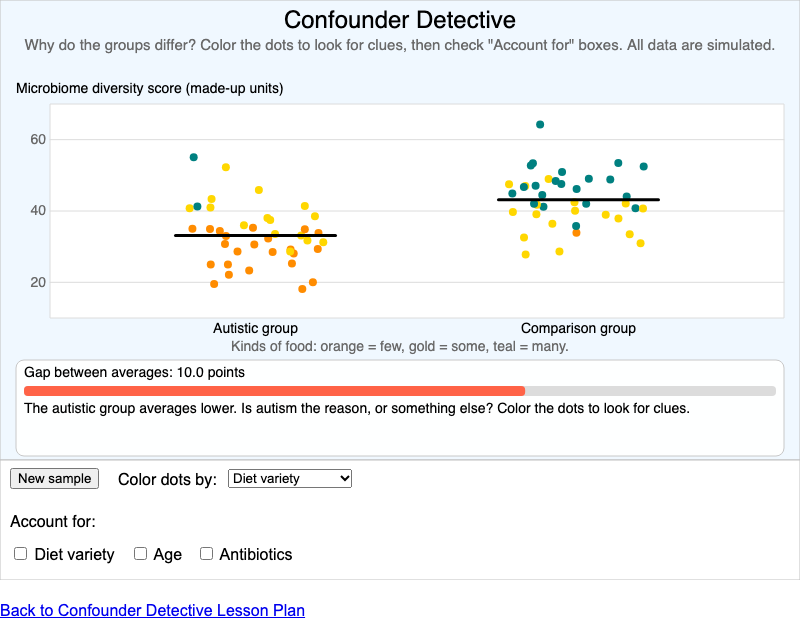
Find the hidden variable: color simulated data by diet, age, and antibiotics and watch a microbiome difference between groups shrink when diet is accounted for.
Chapter 13: Autism, ADHD, and the Gut
-
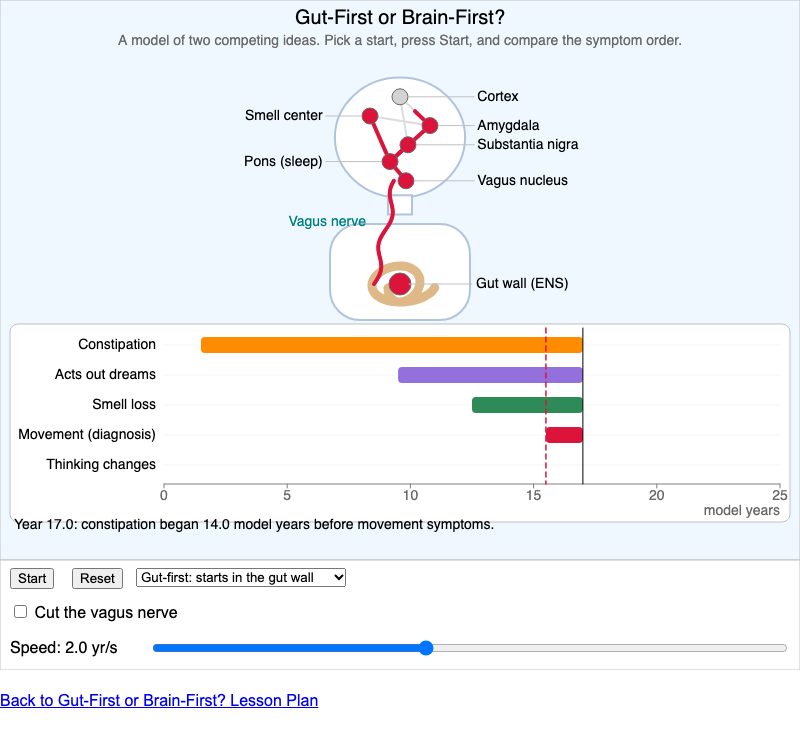
A model of two competing hypotheses about Parkinson's disease. Choose where misfolded alpha-synuclein starts and compare the order of early symptoms each idea predicts.
Chapter 14: Parkinson's, Alzheimer's, and the Gut
-
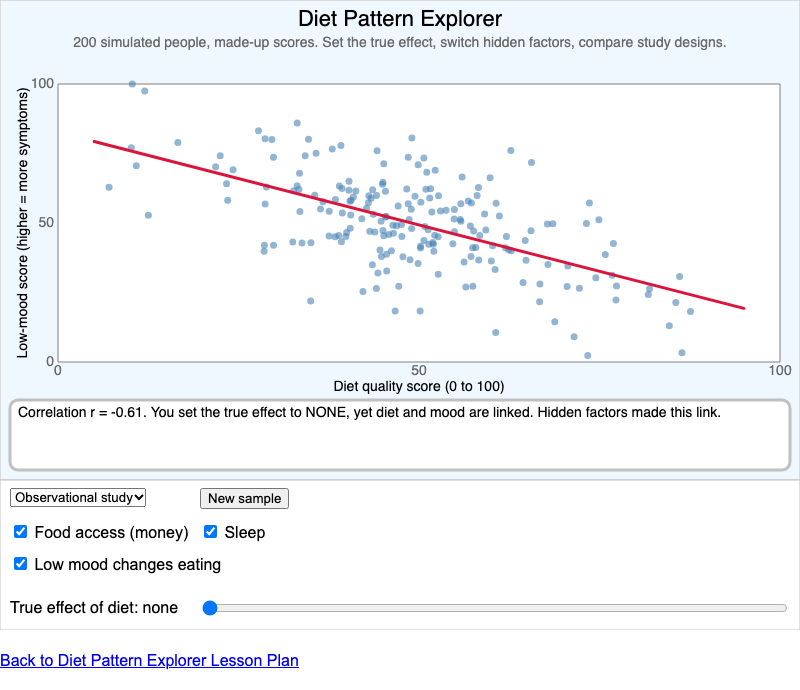
Study 200 simulated people to see how hidden factors can create a link between diet and mood, and how a randomized trial removes that confounding.
Chapter 15: Food and Mood
-
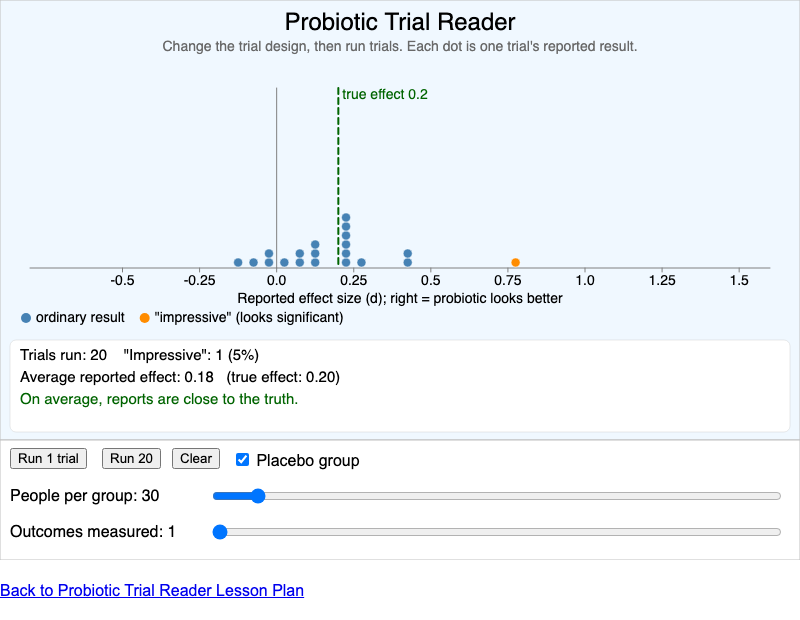
Run pretend probiotic trials and see how trial size, the number of outcomes measured, and a placebo group change how big and how trustworthy the results look.
Chapter 16: Probiotics, Prebiotics, and Psychobiotics
-
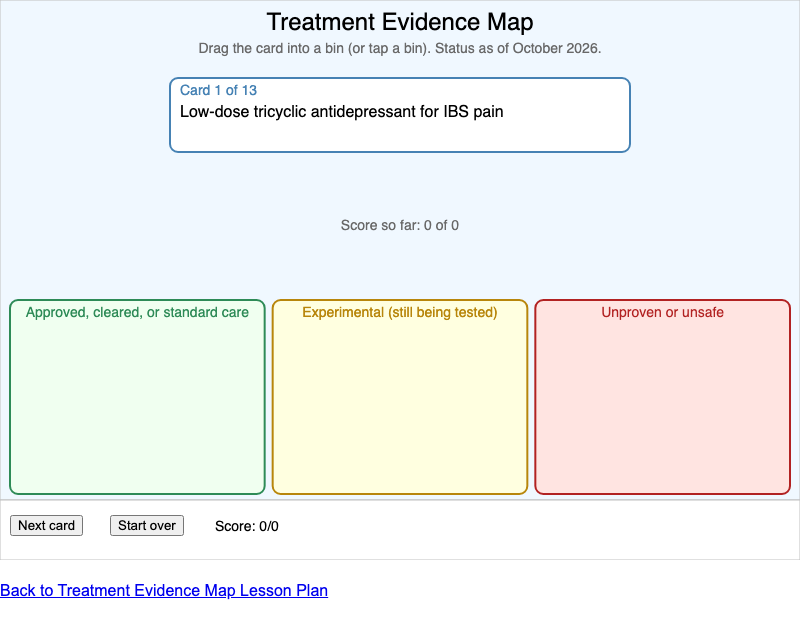
Sort 13 gut-brain treatments, from fecal transplants to vagus nerve stimulators, into approved or standard care, experimental, or unproven, and see the evidence behind each.
Chapter 17: Medicine for the Gut-Brain Axis
-
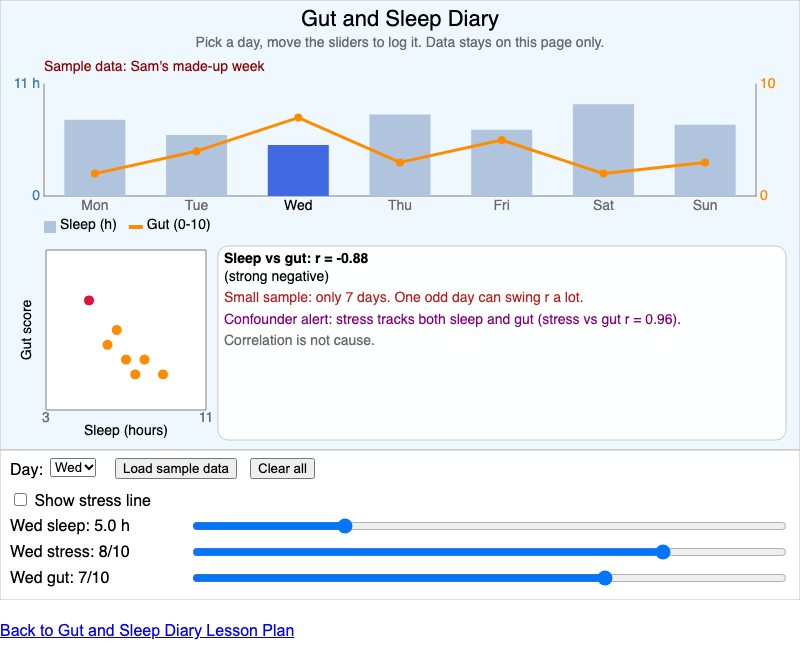
Log a week of sleep, stress, and gut symptoms (or explore a sample week), see the correlation, and learn why a week of personal data can't prove cause.
Chapter 18: Sleep, Exercise, and Therapy
-
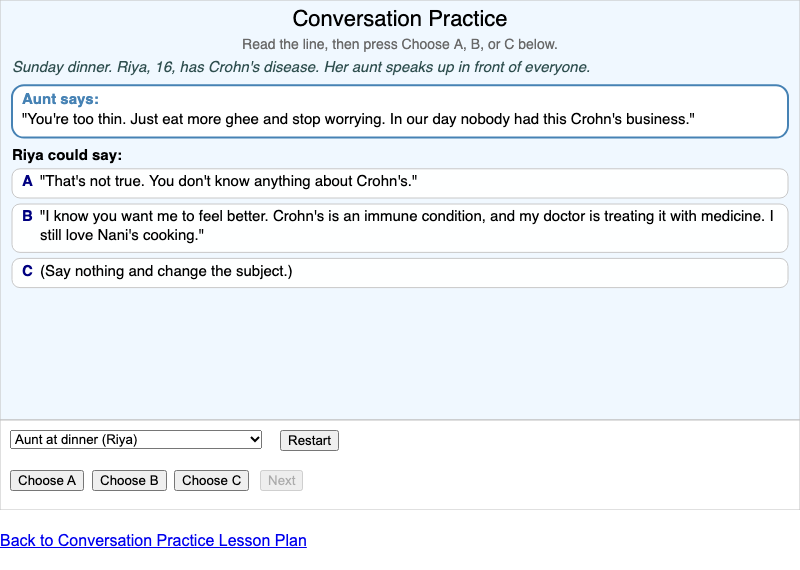
Practice answering mistaken or stigmatizing comments about gut and mental health in four branching scenarios, and see how each reply might land.
Chapter 19: Culture, Food, Family, and Stigma
-
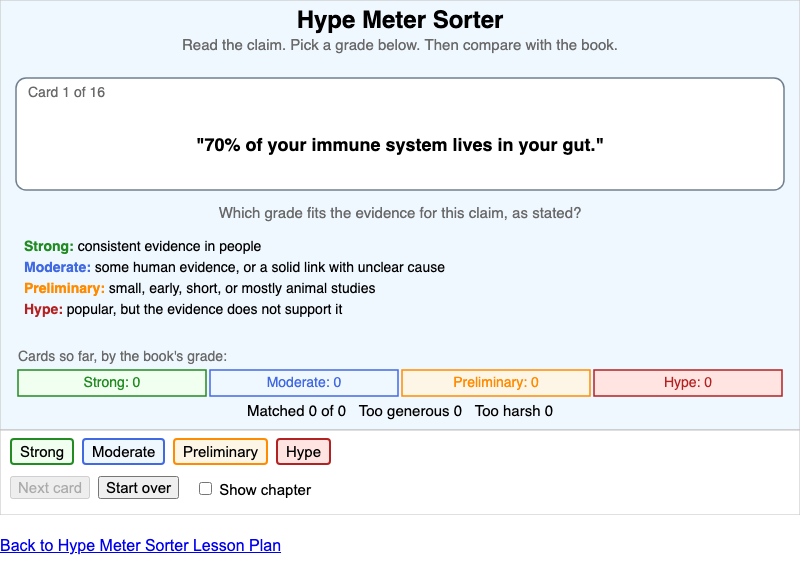
Sort 16 real gut-brain claims from across the book into Strong, Moderate, Preliminary, or Hype, then compare your grade with the book's.
Chapter 20: Be Your Own Scientist
-
Explore all 337 concepts in the book and how they connect.