How to Use This Book
If you're a student
- Start anywhere. Chapter 1 is the best first stop, but each chapter lists its prerequisites at the top, so you can jump to the festival or food chapter if that's what you're curious about.
- Play with the MicroSim. Each chapter has one interactive simulation. Most take two minutes. Try the controls before you read the paragraph that explains them.
- Do the Ask Your Elders interview. It's the most important part of the book. Ten minutes with a parent, grandparent or community elder will teach you things no book can.
- Check yourself. Each chapter has five quick questions, twelve exercises and a separate 10-question quiz with explained answers.
- Use the glossary. Every concept in the book has a short definition in the Glossary.
How words from other languages are shown
The first time a key word appears, you'll see it in its original script, a simple respelling and its meaning, like this: Diwali (दीवाली, dee-VAH-lee), "row of lamps". The CAPITAL letters show which part to stress. The respellings are approximate; the best way to learn a pronunciation is to ask someone who speaks the language. See Appendix A.
Meet your guides
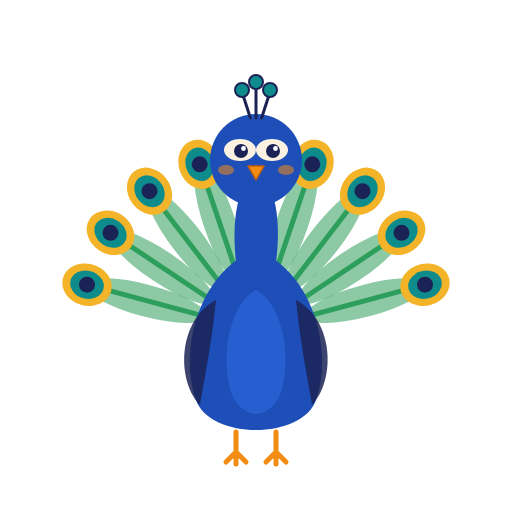
Mora is a young peacock who pops up in each chapter with a tip, a warning about a common mix-up, or a question to think about. The peacock motif runs through art across South Asia, from temple carvings to textiles.
Zara Hossain and Ben Lindqvist are two fictional sophomores at a Minnesota high school. Zara's family is from Bangladesh; Ben's is Swedish and Norwegian. They start a South Asian Student Association together, and each chapter begins with a question one of them can't answer yet. Their friends Arjun, Simran, Ayesha, Nima and Dilan show up along the way. All of them are made up.
The boxes you'll see
| Box | What it's for |
|---|---|
| Mora's boxes | A welcome, a tip, a common mix-up, a question to think about |
| Whose Story? | How different communities or historians tell the same thing |
| Your interview for this chapter | The Ask Your Elders guide |
| Collapsible questions | Click to reveal the answer after you've tried |
The learning graph
Every idea in this book is a node in a learning graph, a map of 368 concepts and which ones you need first. You can explore it in the Learning Graph Viewer.
On a phone, offline, or on paper
The site works on phones. If your internet is slow, or you want to read on paper, every chapter is on the Downloads page as a PDF.
If you're a teacher or club leader
See For Teachers for pacing plans and standards connections, and the Club Kit for a ready-to-run meeting plan.